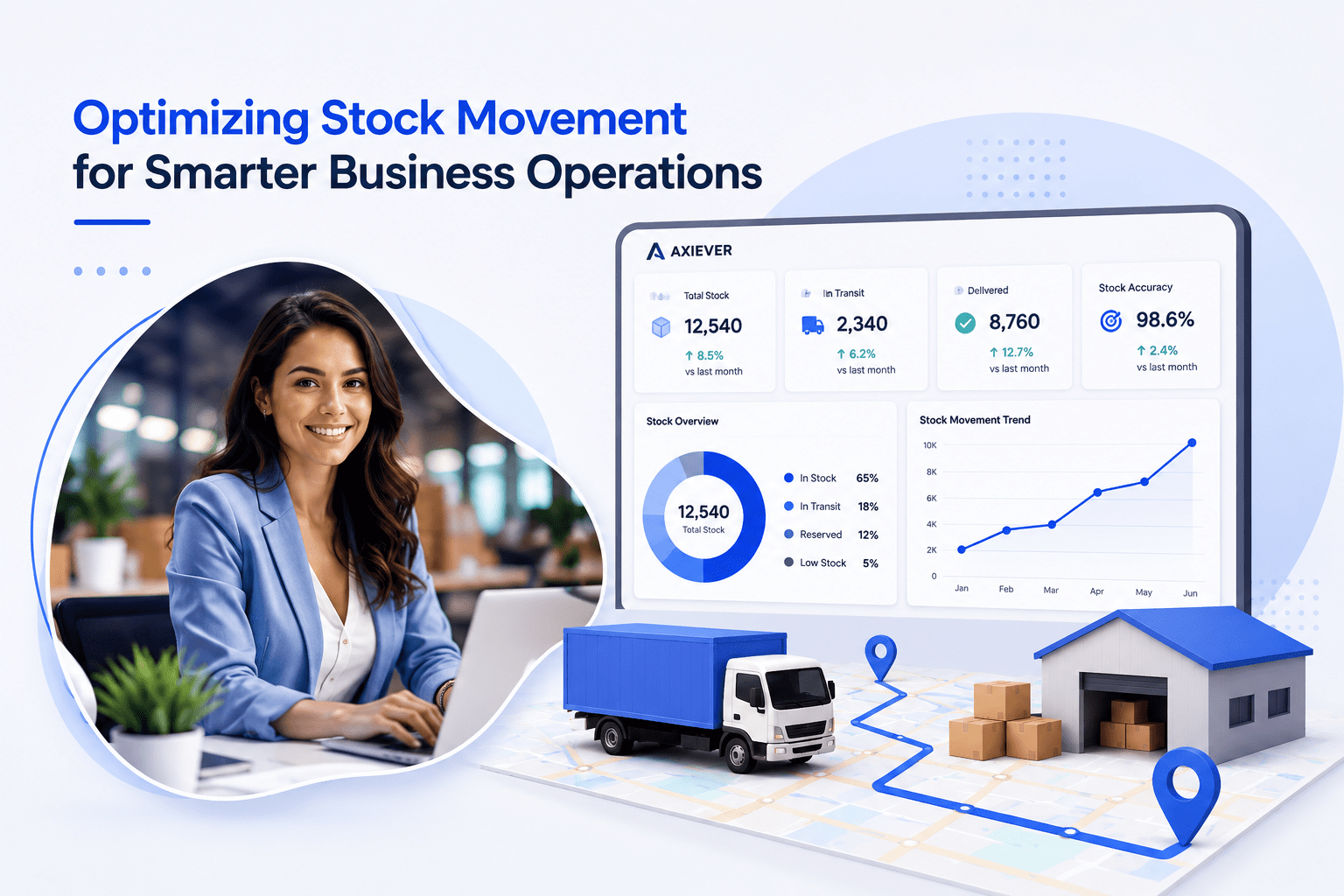
Optimizing stock movement for smarter business operations
Why stock movement matters in modern businesses
Stock movement is one of the most critical components of business operations. It defines how goods flow across procurement, storage, production, sales, and final delivery.
When inventory movement is managed efficiently, businesses reduce delays, maintain accurate stock levels, and improve operational efficiency.
However, many organizations still struggle with stock inaccuracies, delayed replenishment, warehouse inefficiencies, and disconnected systems.
Impact:
Poor stock management increases costs, slows growth, and affects customer satisfaction.
What is stock movement?
Stock movement refers to the flow of products throughout the supply chain from raw material purchasing to final customer delivery.
- Procurement of inventory
- Warehouse storage
- Inventory transfers
- Production movement
- Order fulfillment
- Product delivery
Efficient stock management ensures the right products are available at the right time without overstocking or shortages.
Why efficient stock management is important
Effective stock control directly impacts profitability, operational efficiency, and customer experience.
Businesses with optimized inventory movement reduce waste, improve order fulfillment, and maintain healthier cash flow.
Benefits:
Better visibility, faster fulfillment, lower holding costs, and improved customer satisfaction.
Common inventory management challenges
1. Lack of real-time inventory visibility
Without centralized tracking, teams rely on outdated data, leading to inventory mismatches and delayed decisions.
2. Manual inventory management
Spreadsheet-based tracking increases the risk of errors, duplicate entries, and inaccurate reporting.
3. Overstocking and stock shortages
Poor demand forecasting leads to excess inventory or frequent stockouts.
4. Warehouse inefficiencies
Disorganized warehouse processes slow picking, packing, and dispatch operations.
5. Disconnected operational systems
When procurement, warehouse, finance, and sales operate separately, inventory planning becomes reactive instead of strategic.
Types of inventory management methods
FIFO (First In, First Out)
Older inventory is sold or used first. Commonly used for perishable or fast-moving goods.
LIFO (Last In, First Out)
Newer inventory is prioritized first, often used for specific accounting or operational strategies.
JIT (Just-In-Time)
Inventory is received only when required, minimizing storage and holding costs.
How ERP software improves inventory operations
Modern ERP platforms integrate inventory, warehouse, procurement, and sales into a single system.
Real-time inventory tracking
- Live stock visibility
- Accurate product movement tracking
- Reduced discrepancies
- Faster decision-making
Automated inventory replenishment
Automated replenishment maintains optimal stock levels based on demand and predefined thresholds.
Centralized multi-warehouse management
ERP systems provide unified visibility across multiple warehouses and locations.
Demand forecasting and inventory planning
Forecasting tools use historical data to predict demand and improve purchasing decisions.
Warehouse optimization
ERP-enabled warehouse management improves picking, packing, categorization, and dispatch coordination.
Best practices to improve operations
- Implement inventory automation
- Maintain real-time inventory visibility
- Improve warehouse organization
- Integrate procurement and inventory operations
- Monitor inventory performance metrics
How Axiever helps optimize business operations
:contentReference[oaicite:0]{index=0} helps businesses simplify and optimize inventory operations through intelligent ERP solutions.
- Real-time inventory tracking
- Automated inventory workflows
- Improved warehouse coordination
- Streamlined procurement management
- Enhanced inventory forecasting
- Efficient multi-location inventory control
Impact:
Unified ERP systems enable smoother stock movement
and stronger operational efficiency.
Final thoughts
Efficient stock movement is essential for reducing costs, improving productivity, and maintaining customer satisfaction.
Businesses relying on manual processes and disconnected systems often struggle with inaccuracies and delays.
Modern ERP solutions provide real-time visibility, automation, and forecasting to build faster, smarter, and more scalable operations.