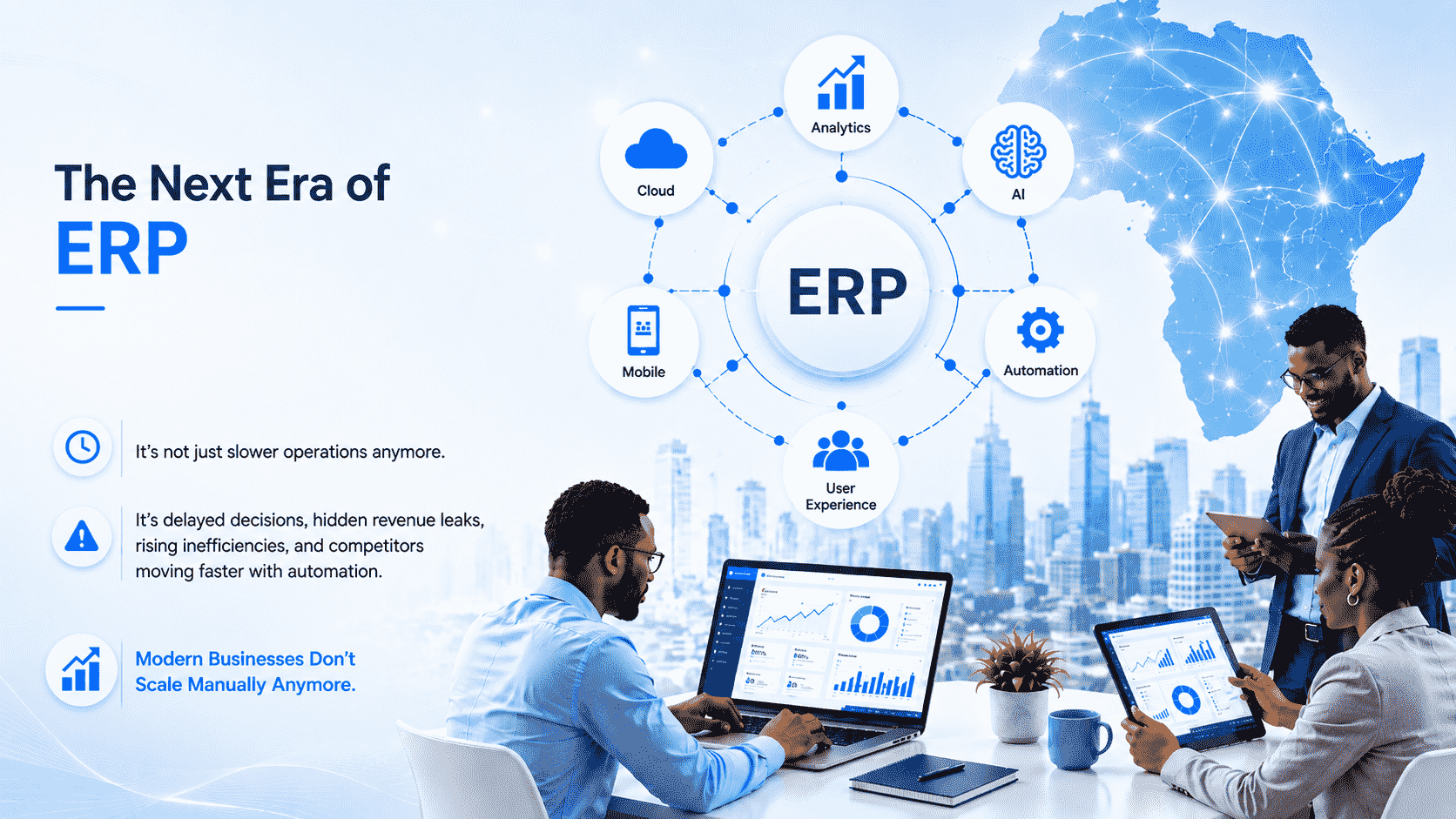
The Next Era of ERP software will look nothing like the last one
Why ERP systems are undergoing a major transformation
For years, ERP software has been the backbone of business operations, helping organizations manage finance, inventory, procurement, sales, and other critical processes. However, business needs are changing rapidly and the next generation of ERP software is expected to look very different from traditional systems.
Many organizations now recognize that legacy ERP platforms alone cannot meet the demands of today’s fast moving business environment. Companies need greater flexibility, faster access to information, improved automation, and better visibility across departments.
Industry insight:
ERP software is evolving from a back-office system
into a strategic platform that supports growth,
agility and digital transformation.
Why traditional ERP models are falling short
One of the biggest concerns highlighted by industry experts is that many ERP implementations fail to deliver the expected business outcomes. As a result, organizations are rethinking how ERP software should support long-term growth and transformation goals.
Modern businesses no longer rely on a single application to manage all operations. Instead, they are building connected technology ecosystems where ERP platforms work alongside customer management tools, analytics platforms, workflow automation systems, and other business applications.
ERP is becoming a connected business platform
This shift is changing the role of ERP software from a transaction-processing tool into a central business management platform. Rather than operating in isolation, ERP systems are now expected to connect data, processes and teams across the organization.
Businesses want ERP platforms that support collaboration, real-time reporting, and seamless integration with other digital tools. This connected approach helps organizations respond faster to change and make more informed decisions.
The growing role of AI in ERP software
Artificial Intelligence is becoming a major driver of ERP innovation. Businesses want systems that go beyond data storage and actively support smarter operations.
Future ERP platforms are expected to:
- Automate repetitive operational tasks
- Improve forecasting and planning accuracy
- Generate actionable business insights
- Support faster, data-driven decision-making
Instead of simply collecting data, AI-enabled ERP systems help businesses use information more effectively across finance, operations, supply chain, and customer management.
Cloud-first ERP is becoming the standard
Cloud adoption is another major force transforming the ERP landscape. Organizations are increasingly choosing cloud-based ERP because it offers scalability, lower maintenance requirements, and easier access to business information.
Cloud ERP also allows companies to benefit from continuous updates, new features, and improved security without major system disruptions. This flexibility is especially important for growing and multi-location businesses.
The rise of industry-specific ERP solutions
Businesses are also demanding ERP platforms tailored to their specific operational needs. Generic systems often introduce unnecessary complexity and slow user adoption.
Industry-focused ERP solutions help organizations:
- Streamline industry-specific workflows
- Improve user adoption and efficiency
- Reduce customization overhead
- Achieve faster time-to-value
Key trends shaping the future of ERP
Experts believe the next era of ERP software will be defined by several core developments:
- AI-powered automation
- Real-time business insights
- Cloud-first deployment models
- Connected business applications
- Flexible and adaptive workflows
- Faster and smarter decision-making
As these trends continue to evolve, ERP software will move far beyond basic record management and become a strategic driver of productivity and operational agility.
What this means for businesses
Businesses today operate in an environment where speed, efficiency, and data-driven decision-making are essential. Organizations that rely on disconnected systems and manual processes may struggle to remain competitive.
The next generation of ERP software is designed to address these challenges by improving automation, increasing visibility and strengthening integration across operations.
Preparing for the future with Axiever
At we believe intelligent automation, connected workflows, and modern ERP capabilities will play a crucial role in helping businesses achieve sustainable growth.
By adopting flexible, cloud-based, and AI-enabled ERP solutions, organizations can position themselves to adapt confidently to future business demands and opportunities.