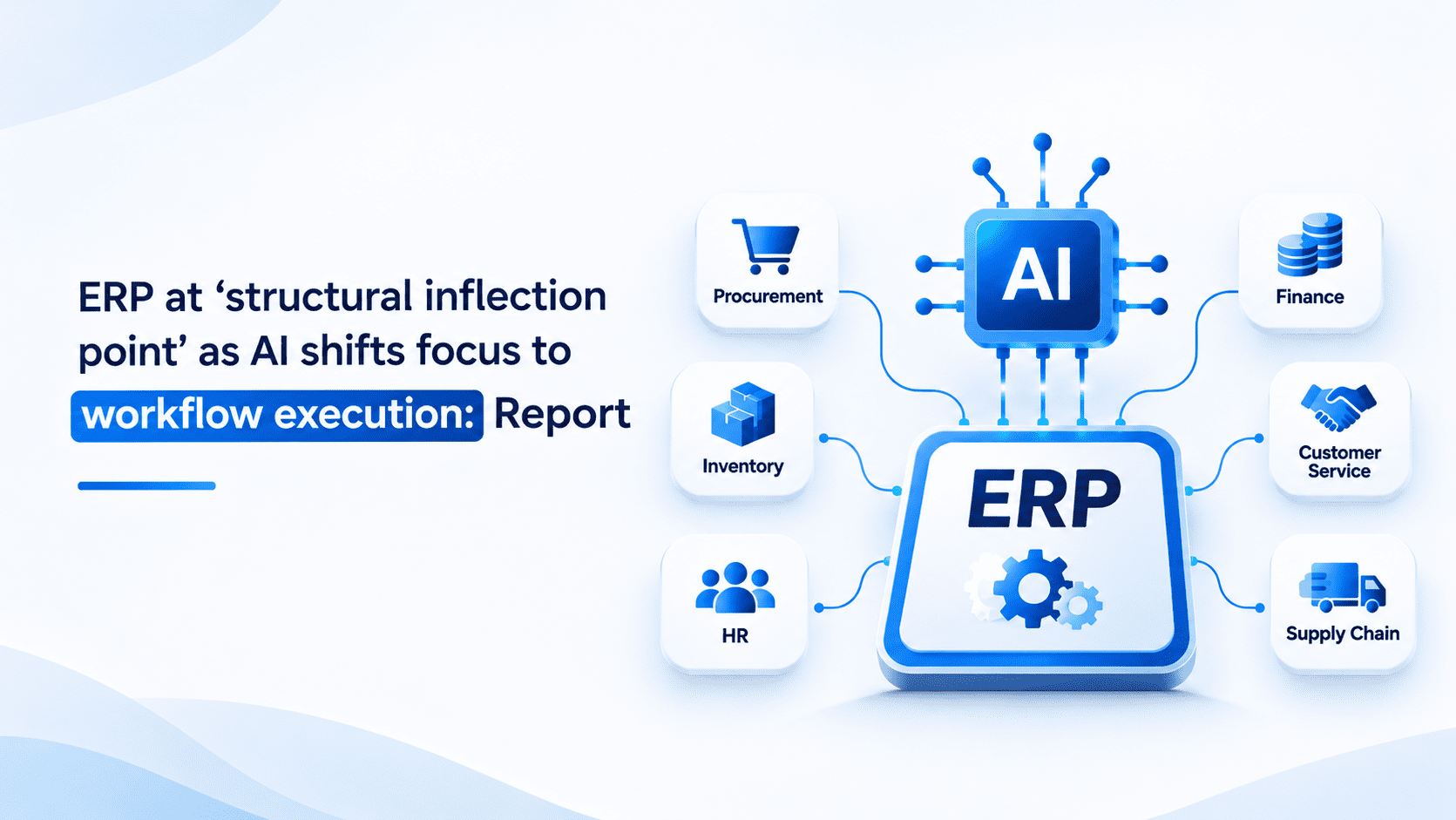
ERP at ‘Structural inflection point’ as AI shifts focus to workflow execution: Report
Artificial intelligence is changing how organisations use ERP software. The next stage of this shift may take technology beyond storing information and presenting reports towards coordinating and carrying out everyday business activities. A Bernstein report, cited by LiveMint, describes the enterprise resource planning market as being at a “structural inflection point.” Its analysis points to AI as a force reshaping software competition, business models, and the way companies manage operational workflows. The central question is no longer only how systems capture business data, but how effectively they help turn that data into action.
From systems of record to systems of execution
For many years, ERP platforms have served as systems of record, bringing together information about customers, suppliers, orders, inventory, finance, and other essential activities. AI creates an opportunity to connect those records with the next steps in a process. When stock falls below a defined level, an intelligent application could identify the shortage and prepare a replenishment request for approval.
This is the distinction between displaying information and helping execute work. Instead of asking only what happened, teams can ask what needs to happen next, who should be involved, and which steps can be handled automatically.
Why trusted business data matters
The growth of AI agents does not make core ERP systems irrelevant; in many organisations, it makes dependable operational information even more valuable. Useful AI decisions depend on accurate records, clear processes, and appropriate permissions.
Consider procurement. Before an automated assistant can prepare or progress a purchase, it may need to check approved suppliers, existing orders, stock levels, budgets, contract terms, and authorisation limits. If those records are incomplete or inconsistent, automation may produce errors more quickly rather than improve the process. Businesses therefore need to think about data quality and governance alongside AI adoption.
Workflow execution becomes a competitive focus
A sales cycle can begin with an enquiry, move through quotation and order confirmation, require an inventory check, and continue through fulfilment, invoicing, and payment. In a fragmented environment, employees may have to transfer information between tools and manually check whether each stage is complete. A connected ERP can reduce those hand-offs by sharing information and triggering the next approved task when conditions are met.
The objective is not automation for its own sake. It is to reduce avoidable administration, shorten delays, and make routine work more consistent, while leaving judgement and exceptions with the people best placed to handle them.
AI features must deliver measurable value
A conversational assistant or an impressive demonstration can attract attention, but businesses need evidence that a technology improves operations. Useful measures include processing time, order accuracy, approval turnaround, stock availability, error rates, and the amount of manual work required. Organisations should start with specific problems, establish a baseline, and test whether automation improves results.
A changing competitive landscape
The bernstein analysis points to a changing competitive environment for established software providers and newer AI-focused companies. Traditional ERP vendors manage transactions and core records, while newer tools may specialise in agents and cross-application automation. Core platforms continue to manage structured records and controls, while AI tools connect information, interpret requests, and coordinate selected actions across workflows.
Adoption is likely to be gradual and accountable
A move towards more autonomous operations will take time. Many organisations are likely to start with copilots that summarise information before introducing supervised automation. Businesses assessing their technology strategy can start by reviewing the quality of their operational data and documenting their most important workflows. Ultimately, the future of ERP is moving from insight alone towards accountable action.