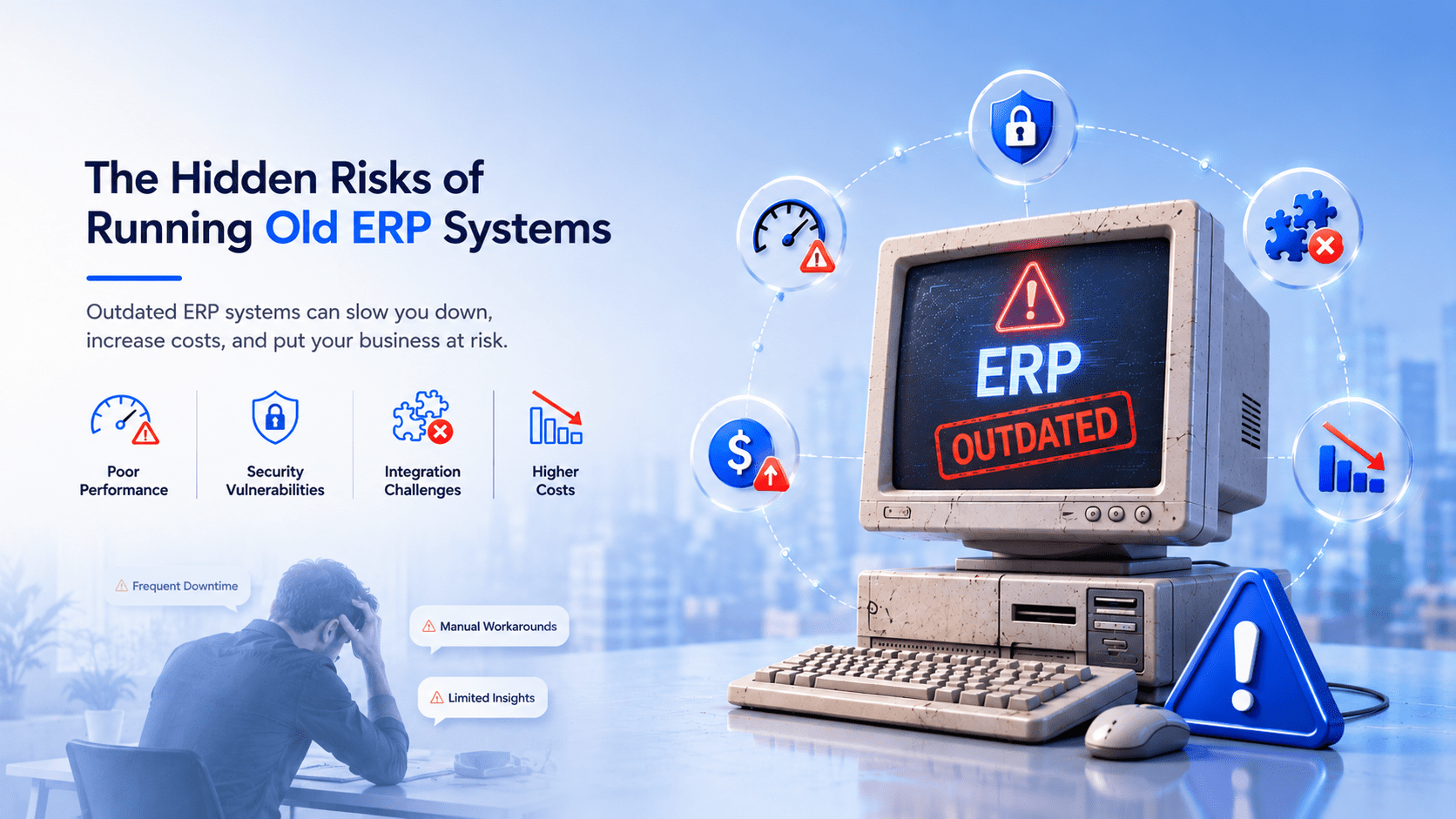
The Hidden Risks of Running Old ERP Systems
Introduction
Many businesses continue to operate on old ERP systems because they are familiar and have “always worked.” But as digital expectations evolve, these older platforms can become a serious liability, affecting growth, security, and operational efficiency.
Legacy ERP systems were designed for a business environment with fewer digital tools, limited automation, and minimal real-time data. Today’s businesses require interconnected systems that can integrate with cloud applications, analytics engines, AI tools, and customer experience platforms.
Security Risks of Outdated ERP Systems
One of the most serious risks of running an old ERP system is security. Many legacy platforms no longer receive regular updates or security patches. This makes them increasingly vulnerable to cyberattacks, ransomware, data breaches, and unauthorized access.
A single breach can interrupt operations, expose sensitive business data, and result in regulatory penalties or reputational damage — risks that modern ERP solutions are designed to mitigate.
Scalability Challenges with Old ERP
As companies grow, their ERP systems need to handle larger data volumes, more complex workflows, and integrations with new business tools.
Legacy systems often struggle to cope with increased demand, resulting in:
- Slower performance
- Disconnected operations
- Limited integration with modern tools
- Delayed decision-making due to outdated data
Without scalability, businesses can experience bottlenecks that slow down innovation and restrict growth potential.
Productivity Impacts of Old ERP Systems
Old ERP systems can also reduce productivity. Employees often spend extra time managing manual tasks, navigating outdated interfaces, and reconciling scattered reports across different systems.
Instead of spending time on value-added activities like strategic planning or customer engagement, teams find themselves maintaining outdated processes — reducing overall efficiency and slowing organizational momentum.
Why Modern ERP Systems Are Better
Modern ERP solutions are built for today’s fast-moving digital economy. Platforms like Axiever help businesses improve efficiency through automation, real-time insights, cloud connectivity, and advanced security features.
With a modern ERP, organizations can:
- Automate repetitive processes
- Gain real-time operational visibility
- Integrate seamlessly with analytics and AI tools
- Support remote and hybrid work environments
- Make faster, data-driven decisions
This shift allows companies to adapt more easily to changing market demands and unlock new opportunities for growth.
Industry experts warn that delaying ERP modernization increases long-term costs and slows digital transformation. The longer a legacy system remains in place, the harder it becomes to integrate new technologies and keep pace with competitors.
Conclusion
Upgrading from an old ERP system is no longer just a technology upgrade — it’s a strategic business decision. Modern ERP platforms help companies improve efficiency, reduce risks, strengthen security, and lay the foundation for future growth.
For businesses planning long-term digital transformation, evaluating and modernizing ERP infrastructure should be a top priority.