ERP for vendor & supplier management: improving procurement efficiency in kenya
Procurement challenges are increasing for Kenyan businesses
Businesses across Kenya are increasingly embracing digital transformation to improve procurement operations and strengthen supplier relationships.
As supply chains grow more complex, manual processes lead to delays, inefficiencies, and rising operational costs.
This is why many organizations are turning to ERP systems.
Impact:
ERP centralizes procurement and supplier management into a single system.
Why vendor and supplier management matters
Efficient vendor and supplier management is critical for maintaining smooth and reliable business operations.
Many organizations still struggle with disconnected procurement systems, manual approvals, delayed supplier communication, and poor visibility.
Impact:
Poor supplier management leads to delays, errors, and higher costs.
Centralized supplier information
ERP systems create a centralized supplier database that stores vendor profiles, contracts, pricing agreements, certifications, and transaction history.
Procurement teams gain instant access to accurate supplier information, improving collaboration and decision-making.
Impact:
Centralized data reduces duplication and improves supplier transparency.
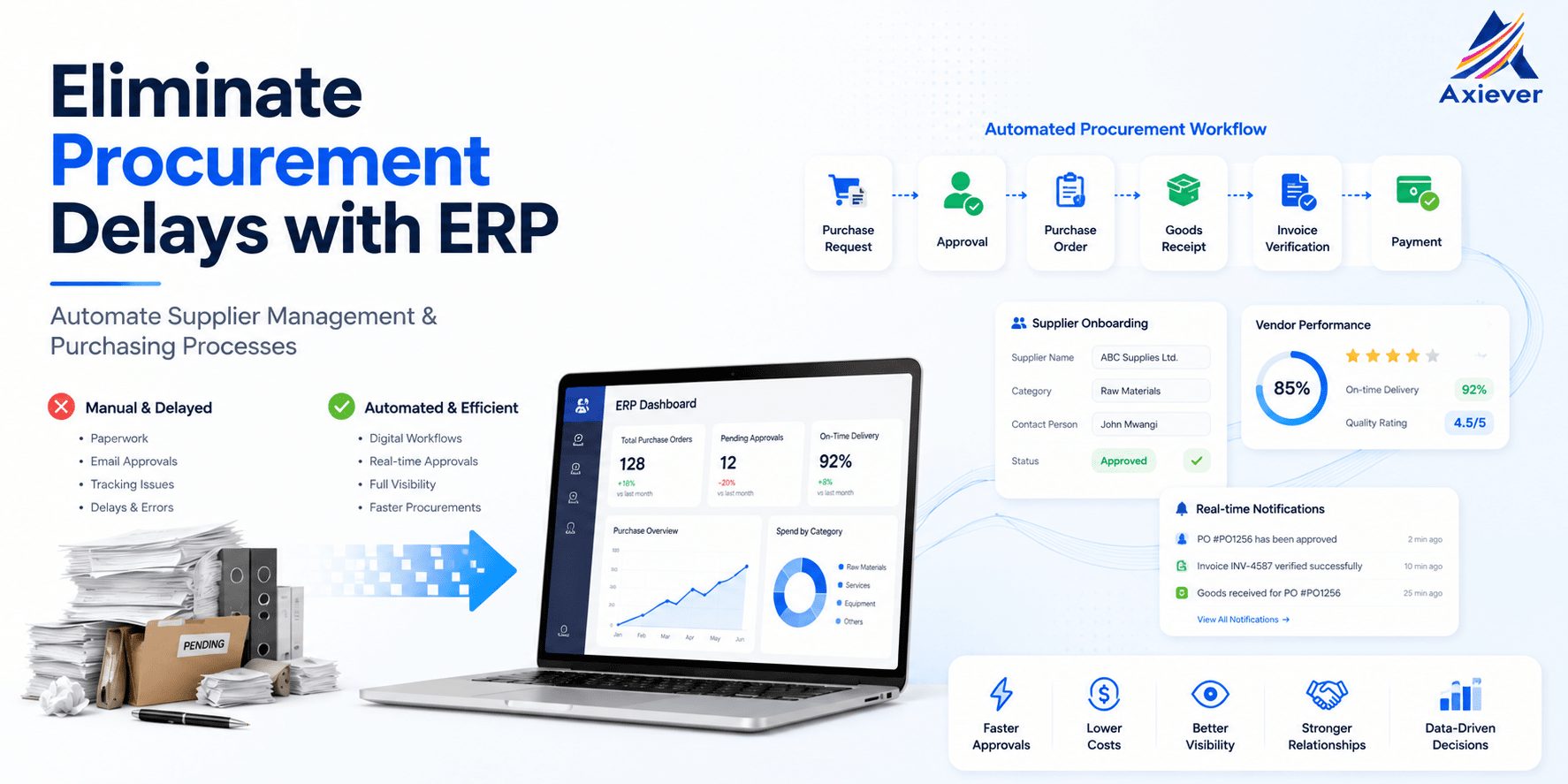
Automated procurement workflows
Manual procurement processes slow down purchasing cycles and increase errors.
ERP software automates purchase requisitions, approvals, purchase orders, invoicing, and payment processing.
Impact:
Automation speeds up approvals and minimizes procurement delays.
Real-time inventory visibility
Procurement and inventory management are closely connected.
ERP systems provide real-time inventory tracking, helping businesses avoid stock shortages and overstocking.
Impact:
Real-time visibility improves planning and purchasing accuracy.
Better supplier performance tracking
ERP platforms enable businesses to track supplier performance using delivery timelines, pricing consistency, and fulfillment rates.
Data-driven insights help improve vendor accountability and strengthen long-term supplier relationships.
Impact:
Performance tracking improves procurement transparency.
Improved financial control
ERP systems integrate procurement with finance and accounting, providing better budget control and real-time spending visibility.
Businesses can track procurement expenses, manage invoices, and automate payment processing.
Impact:
Integrated finance reduces overspending and reconciliation issues.
Why Kenyan businesses are adopting cloud ERP
Cloud ERP solutions are gaining adoption across Kenya due to scalability, accessibility, and lower infrastructure costs.
They support multi location procurement and real-time collaboration across departments.
Impact:
Cloud ERP supports growth across regions and industries.
How Axiever helps businesses streamline vendor management
Axiever provides an advanced cloud ERP solution designed to simplify procurement and supplier management for modern businesses. The platform helps organizations automate purchasing workflows, manage supplier relationships, track inventory in real time, and improve financial visibility through a centralized system.
Impact:
Centralized ERP removes procurement bottlenecks.
Key features of Axiever ERP
Axiever supports modern procurement and supplier management through:
Vendor and supplier management, procurement automation, inventory and warehouse management, financial integration, approval workflows, and real time dashboards.
Impact:
Businesses gain visibility, control, and efficiency.
Final thoughts
Vendor and supplier management plays a critical role in business growth and operational stability.
ERP systems help Kenyan businesses automate procurement, improve supplier relationships, and gain real time visibility.
Modern cloud ERP platforms enable scalable, efficient, and compliant procurement operations.