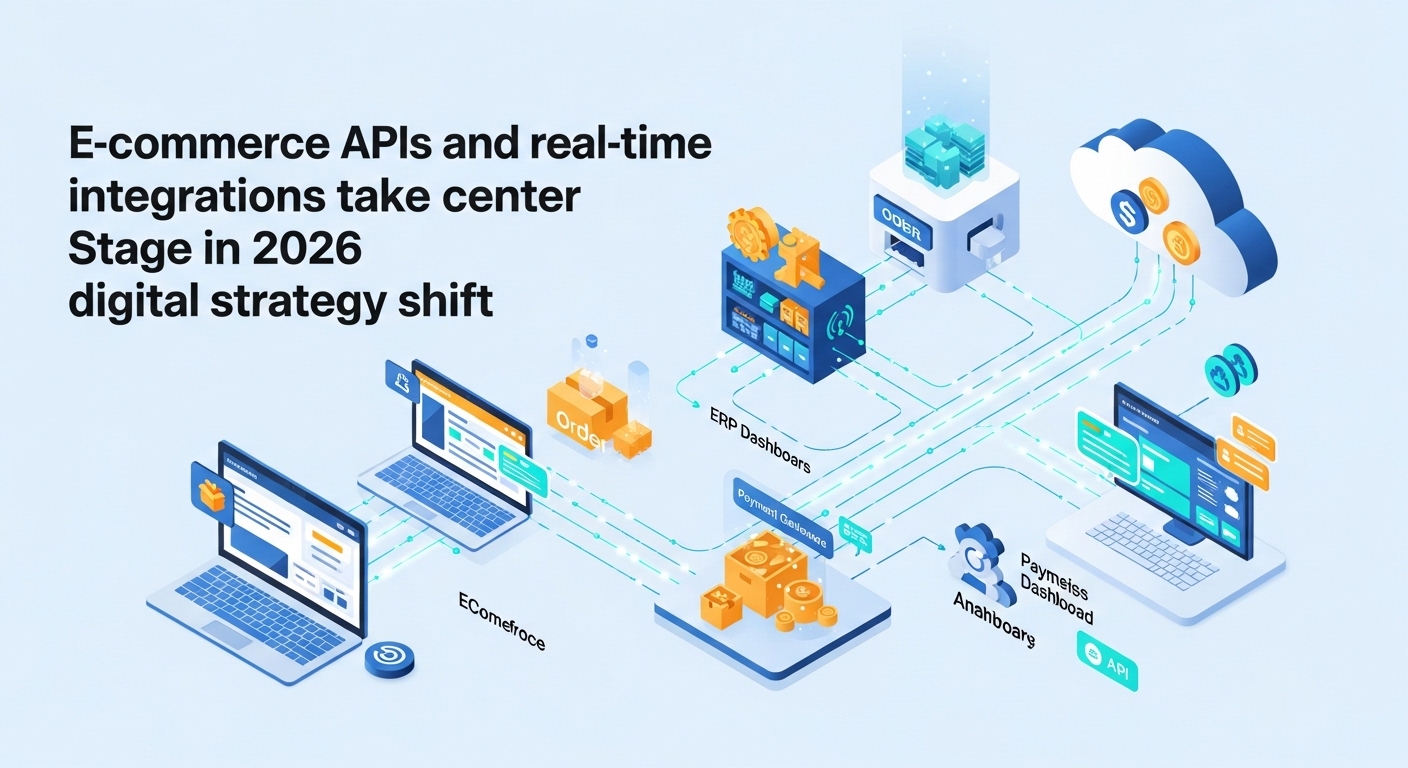
E-commerce APIs and real time integrations take center stage in 2026 digital strategy shift
API first commerce architectures are redefining enterprise digital operations as real time system integration becomes a strategic necessity.
Global enterprises are accelerating investments in API driven commerce platforms as real time data synchronization becomes business critical in 2026.
Industry analysts report a clear move away from rigid, monolithic e-commerce systems toward modular technology stacks designed to deliver instant connectivity between storefronts and backend enterprise systems.
Organizations now expect real-time order processing, live inventory updates, and synchronized customer data without manual intervention.
From isolated platforms to connected ecosystems
Historically, enterprise e-commerce platforms relied on batch processing and scheduled data transfers between front-end and backend systems.
These approaches often resulted in inventory discrepancies, delayed invoicing, and operational inefficiencies.
In 2026, API driven architectures enable systems to communicate instantly, triggering automated workflows and significantly reducing reliance on manual reconciliation.
Real time inventory and order synchronization
With enterprises selling across websites, marketplaces, and mobile channels, maintaining accurate inventory visibility has become operationally critical.
Real-time integrations ensure inventory levels update immediately when transactions occur, while order data flows directly into ERP systems for fulfillment and billing.
This automation reduces overselling risks, shortens fulfillment cycles, and improves overall supply chain coordination.
ERP systems move to the core of digital commerce
ERP platforms are no longer limited to back office functions. They are increasingly positioned as central command systems within digital commerce ecosystems.
Solutions such as Axiever are aligning ERP capabilities with real time e-commerce integrations, enabling automated financial reconciliation, dynamic pricing updates, live inventory tracking, and centralized operational reporting.
Industry experts note that this level of integration provides leadership teams with real time visibility across sales, finance, and operations.
Security, compliance, and expanding API layers
As integration layers grow, cybersecurity and regulatory compliance are receiving increased attention.
Secure API authentication, encrypted data exchange, and role based access controls are now considered mandatory for enterprise deployments.
Businesses are prioritizing vendors that offer compliance ready integration frameworks with real time monitoring capabilities.
A competitive imperative for 2026
Analysts warn that enterprises slow to adopt real time, API first commerce strategies risk falling behind more automated competitors.
Organizations operating fully integrated ecosystems report higher operational efficiency, improved financial accuracy, and stronger customer retention.
As 2026 progresses, API-driven, real time commerce infrastructure is no longer an innovation initiative it is a strategic foundation for enterprise growth.