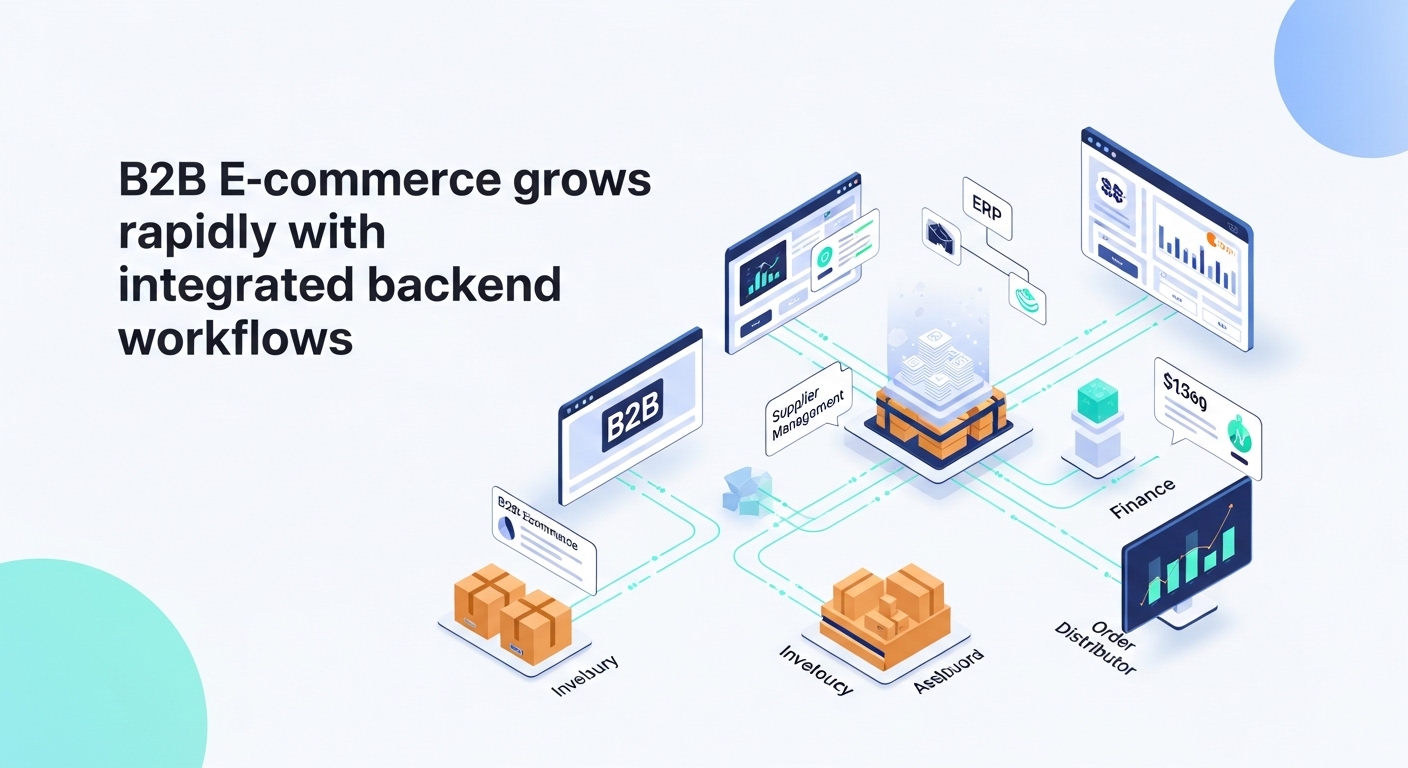
B2B E-commerce grows rapidly with integrated backend workflows
B2B commerce is shifting toward fully connected backend systems that enable real-time pricing, inventory visibility, and faster fulfillment.
The global B2B e-commerce sector is entering a new phase of maturity in 2026, driven by rapid adoption of integrated backend workflows.
Wholesalers, manufacturers, and distributors are moving away from disconnected digital storefronts toward unified ecosystems where pricing, inventory, and order data flow seamlessly between e-commerce platforms and ERP systems.
Rising buyer expectations for speed, transparency, and convenience are accelerating this transformation across B2B industries.
From manual processes to automated systems
Historically, many B2B organizations relied on semi digital workflows where online orders required manual verification, delayed inventory checks, and internal approvals.
These fragmented processes slowed fulfillment cycles and increased the risk of human error.
In 2026, businesses are implementing integrated commerce systems that connect digital storefronts directly with ERP platforms, enabling automated order validation and workflow execution.
ERP platforms such as Axiever are aligning their modules to support automated order processing, synchronized inventory, and dynamic pricing within a single connected environment.
Real time pricing and inventory visibility
Modern B2B transactions rely on complex pricing models including contract pricing, volume discounts, and negotiated agreements.
Integrated backend systems allow these pricing rules to sync directly from ERP databases to e-commerce storefronts in real time.
Real time inventory visibility ensures buyers see accurate stock availability before placing large volume orders, reducing backorders and operational disruptions.
Faster fulfillment through connected workflows
When e-commerce platforms are integrated with backend systems, order data flows automatically into ERP environments.
Warehouse teams can begin processing immediately, while finance departments generate invoices without delay.
This reduces duplicate data entry, improves accuracy, and creates full visibility across sales, operations, and finance.
Automation becomes buyer expectation
B2B buyers increasingly expect self service portals, real-time order tracking, automated approvals, and instant access to account history.
Suppliers that fail to offer automated, connected experiences risk losing long term customer relationships.
Fully integrated, API driven infrastructures are quickly becoming the standard across manufacturing, wholesale, and industrial supply sectors.
A structural evolution in B2B commerce
Market forecasts indicate that the next phase of B2B growth will be defined by deeper system integration and real time data intelligence.
As ERP platforms expand connectivity capabilities, businesses gain the ability to scale efficiently, reduce friction, and meet evolving buyer demands.
In 2026, B2B e-commerce is no longer about launching an online portal—it is about building a connected, automated ecosystem that delivers speed, accuracy, and transparency.